
Leia, Comente e Compartilhe –
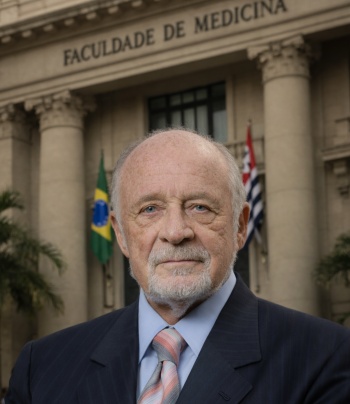
Há momentos em que a história avança sem alarde, conduzida não por slogans, mas por ideias sólidas e pela autoridade silenciosa de quem conhece a realidade por dentro. A construção do atual Código de Trânsito Brasileiro foi um desses momentos. Entre os nomes que deram densidade técnica, ética e humana àquele processo, destaca-se o de Dario Birolini.
Formado pela Faculdade de Medicina da USP no início dos anos 1960, professor titular e depois emérito da FMUSP, Birolini construiu sua trajetória ao compreender o trauma não como episódio isolado, mas como expressão de falhas estruturais da sociedade. No Hospital das Clínicas, viu chegar diariamente corpos feridos, vidas interrompidas, famílias desfeitas. Não eram fatalidades imprevisíveis. Eram padrões repetidos, sinais claros de um sistema que adoecia pessoas antes mesmo de elas entrarem em uma ambulância.
Dessa experiência nasceu uma frase que atravessou décadas e permanece incômoda e atual: o acidente de trânsito não é um acidente, mas uma doença que precisa ser controlada e evitada. Nela está contida uma visão inteira de saúde pública. Se é doença, exige diagnóstico. Se é evitável, exige prevenção. Se mata em escala, exige políticas públicas, legislação firme e mudança cultural.
Ao final do século XX, tornava-se evidente que o antigo Código Nacional de Trânsito de 1966 já não respondia à complexidade de um país urbano e motorizado. A revisão do marco legal precisava ir além do aspecto administrativo. Era necessário incorporar ciência, experiência hospitalar e o testemunho direto de quem lidava diariamente com as consequências da omissão do Estado.
Foi nesse contexto que médicos do trauma passaram a ter voz ativa nos debates que culminaram na Lei nº 9.503, de 23 de setembro de 1997, em vigor a partir de janeiro de 1998. A participação de Birolini foi decisiva. Ele levou à discussão números, casos e uma lógica simples e incontestável: cada morte evitada no trânsito representa uma vitória da sociedade sobre a negligência.
O novo Código estabeleceu responsabilidades claras, tipificou crimes de trânsito, fortaleceu a educação como política permanente e abriu caminho para medidas que mais tarde se tornariam centrais, como a Lei Seca. Nada disso surgiu por acaso. Foi fruto da convergência entre legisladores, técnicos e profissionais que conheciam o custo humano da inação.
A autoridade de Birolini vinha também de sua atuação acadêmica. Como professor da FMUSP, formou gerações de cirurgiões que aprenderam a enxergar o trauma não apenas como desafio técnico, mas como problema social prevenível. Seu rigor no ensino refletia a mesma exigência que defendia para o trânsito: regras claras, cumprimento estrito e intolerância ao improviso perigoso.
Há, nesse percurso, uma coerência rara. A medicina, para ele, não terminava na sutura final. Prosseguia na prevenção, na lei bem formulada, na educação persistente e na fiscalização efetiva. O tempo confirmou essa visão. Países que reduziram mortes no trânsito foram os que trataram o problema como questão de saúde pública. O Brasil avançou quando ouviu vozes como a sua e retrocedeu, como agora, quando relativizou a vida em nome da conveniência.
Hoje, afastado da prática clínica, Dario Birolini permanece como referência intelectual e moral. Seu legado não se limita aos livros, aos artigos ou à legislação que ajudou a moldar. Ele prossegue também na prática médica de uma nova geração, representada por seu filho, Dr Claudio Augusto Vianna Birolini, que atualmente lidera equipes cirúrgicas responsáveis pelo acompanhamento do Presidente Jair Bolsonaro, em situações de alta complexidade clínica.
O trânsito continua sendo um espelho da sociedade. Onde a ciência é ouvida e a lei respeitada, há menos mortos. Onde o conhecimento orienta decisões, há mais vidas preservadas. A história de Dario Birolini lembra que salvar vidas também é tarefa de quem escreve leis, forma consciências e tem coragem de chamar as coisas pelo nome certo.
E isso, definitivamente, não é pouco
Traffic Trauma Is Not an Accident
There are moments when history moves forward quietly, driven not by slogans, but by solid ideas and by the silent authority of those who know reality from the inside. The creation of Brazil’s current Traffic Code was one of those moments. Among the figures who gave technical, ethical, and human substance to that process, one stands out: Dario Birolini.
Trained at the University of São Paulo School of Medicine in the early 1960s, later becoming a full professor and then professor emeritus, Birolini built his career by understanding trauma not as an isolated event, but as the expression of deep structural failures in society. At the University Hospital, he witnessed, day after day, injured bodies, interrupted lives, shattered families. These were not random misfortunes. They were recurring patterns, clear signs of a system that harmed people long before they ever reached an ambulance.
From this experience emerged a sentence that has endured for decades, uncomfortable yet profoundly accurate: traffic accidents are not accidents, but a disease that must be controlled and prevented. Within this statement lies an entire public-health worldview. If it is a disease, it requires diagnosis. If it is preventable, it demands prevention. If it kills and maims on a large scale, it requires public policy, firm legislation, and cultural change.
By the end of the twentieth century, it had become evident that Brazil’s 1966 National Traffic Code no longer met the demands of an urban, motorized, and unequal country. Revising the law could not be merely an administrative exercise. It needed to incorporate science, hospital experience, and the direct testimony of those who dealt daily with the consequences of state neglect.
It was in this context that trauma physicians gained an active voice in the debates that led to Law No. 9,503, enacted in September 1997 and in force as of January 1998. Birolini’s participation was far from symbolic. He brought numbers, clinical cases, and a simple, undeniable logic to the table: every life saved on the road represents a victory of society over negligence.
The new Code introduced decisive advances. It defined responsibilities more clearly, classified traffic crimes, strengthened education as a permanent policy, and paved the way for measures that would later become central, such as Brazil’s zero-tolerance drunk-driving laws. None of this happened by chance. It resulted from a rare convergence of lawmakers, technical experts, and professionals who understood the human cost of inaction.
Birolini’s authority was also rooted in his academic work. As a professor, he trained generations of surgeons to see trauma not only as a technical challenge, but as a preventable social problem. His rigor in teaching mirrored the standards he defended for traffic safety: clear rules, strict compliance, and no tolerance for dangerous improvisation.
There is a striking coherence in this trajectory. For him, medicine did not end with the final suture. It continued through prevention, well-crafted laws, sustained education, and effective enforcement. Time has confirmed the soundness of this vision. Countries that reduced traffic fatalities treated the issue as a public-health matter. Brazil advanced when it listened to voices like his, and regressed when it chose to relativize human life for the sake of convenience.
Today, no longer engaged in clinical practice, Dario Birolini remains a moral and intellectual reference. His legacy goes beyond books, articles, or the legislation he helped shape. It continues through a new generation of medical practice, represented by his son, Claudio Augusto Vianna Birolini, who currently leads surgical teams responsible for treating former President Jair Bolsonaro in situations of high clinical complexity.
Traffic remains a mirror of society. Where science is respected and the law is enforced, fewer people die. Where knowledge guides decisions, more lives are preserved. The story of Dario Birolini reminds us that saving lives is also the work of those who write laws, shape consciences, and have the courage to call things by their proper name.
And that, unquestionably, is no small achievement.
There are moments when history moves forward quietly, driven not by slogans, but by solid ideas and by the silent authority of those who know reality from the inside. The creation of Brazil’s current Traffic Code was one of those moments. Among the figures who gave technical, ethical, and human substance to that process, one stands out: Dario Birolini.
Trained at the University of São Paulo School of Medicine in the early 1960s, later becoming a full professor and then professor emeritus, Birolini built his career by understanding trauma not as an isolated event, but as the expression of deep structural failures in society. At the University Hospital, he witnessed, day after day, injured bodies, interrupted lives, shattered families. These were not random misfortunes. They were recurring patterns, clear signs of a system that harmed people long before they ever reached an ambulance.
From this experience emerged a sentence that has endured for decades, uncomfortable yet profoundly accurate: traffic accidents are not accidents, but a disease that must be controlled and prevented. Within this statement lies an entire public-health worldview. If it is a disease, it requires diagnosis. If it is preventable, it demands prevention. If it kills and maims on a large scale, it requires public policy, firm legislation, and cultural change.
By the end of the twentieth century, it had become evident that Brazil’s 1966 National Traffic Code no longer met the demands of an urban, motorized, and unequal country. Revising the law could not be merely an administrative exercise. It needed to incorporate science, hospital experience, and the direct testimony of those who dealt daily with the consequences of state neglect.
It was in this context that trauma physicians gained an active voice in the debates that led to Law No. 9,503, enacted in September 1997 and in force as of January 1998. Birolini’s participation was far from symbolic. He brought numbers, clinical cases, and a simple, undeniable logic to the table: every life saved on the road represents a victory of society over negligence.
The new Code introduced decisive advances. It defined responsibilities more clearly, classified traffic crimes, strengthened education as a permanent policy, and paved the way for measures that would later become central, such as Brazil’s zero-tolerance drunk-driving laws. None of this happened by chance. It resulted from a rare convergence of lawmakers, technical experts, and professionals who understood the human cost of inaction.
Birolini’s authority was also rooted in his academic work. As a professor, he trained generations of surgeons to see trauma not only as a technical challenge, but as a preventable social problem. His rigor in teaching mirrored the standards he defended for traffic safety: clear rules, strict compliance, and no tolerance for dangerous improvisation.
There is a striking coherence in this trajectory. For him, medicine did not end with the final suture. It continued through prevention, well-crafted laws, sustained education, and effective enforcement. Time has confirmed the soundness of this vision. Countries that reduced traffic fatalities treated the issue as a public-health matter. Brazil advanced when it listened to voices like his, and regressed when it chose to relativize human life for the sake of convenience.
Today, no longer engaged in clinical practice, Dario Birolini remains a moral and intellectual reference. His legacy goes beyond books, articles, or the legislation he helped shape. It continues through a new generation of medical practice, represented by his son, Claudio Augusto Vianna Birolini, who currently leads surgical teams responsible for treating former President Jair Bolsonaro in situations of high clinical complexity.
Traffic remains a mirror of society. Where science is respected and the law is enforced, fewer people die. Where knowledge guides decisions, more lives are preserved. The story of Dario Birolini reminds us that saving lives is also the work of those who write laws, shape consciences, and have the courage to call things by their proper name.
And that, unquestionably, is no small achievement.

