
COMENTE, CURTA, COMPARTILHE …
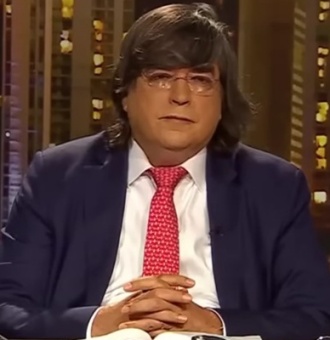
Jaime Bayly nasceu em Lima, em 19 de fevereiro de 1965, e construiu uma trajetória singular no jornalismo latino-americano. Ainda muito jovem, passou a entrevistar políticos na televisão peruana, tornando-se conhecido pelo estilo direto, irreverente e frequentemente incômodo para o poder. Ao longo dos anos, consolidou-se também como escritor premiado e colunista influente. Radicado nos Estados Unidos e naturalizado norte-americano, Bayly é hoje uma das vozes mais conhecidas da imprensa hispânica em Miami, onde apresenta um programa de comentário político marcado por posições liberais nos costumes e conservadoras na política e na economia.
Esse percurso ajuda a compreender o alcance e os limites de suas análises. Bayly não se apresenta como repórter investigativo nem como fornecedor de notícias duras. Seu território é o comentário político, a leitura crítica, a provocação. É desse lugar que ele observa a Venezuela e os movimentos recentes em torno do poder em Caracas.
No programa exibido em janeiro de 2026, Bayly parte de um ponto consistente: a ambiguidade da política internacional diante da crise venezuelana após a queda de Nicolás Maduro. O contraste entre o discurso público em defesa da democracia e a prática diplomática orientada pela estabilidade e pelo controle do colapso social tornou-se cada vez mais evidente. Esse dado é verificável e dispensa conjecturas.
Também é factual que a oposição venezuelana, hoje simbolizada por María Corina Machado, desfruta de amplo reconhecimento moral no exterior sem que isso se converta em poder institucional efetivo. A distância entre legitimidade política e capacidade real de governar permanece como um dos nós centrais da crise. Ao insistir nesse ponto, Bayly toca numa ferida real.
Outro aspecto sólido de sua leitura é a crítica à seletividade na libertação de presos políticos. Organizações independentes confirmam avanços pontuais, mas longe de uma solução estrutural. A persistência de detenções arbitrárias segue sendo um sinal claro de que o aparato repressivo não foi desmontado.
Procede também sua observação sobre a linguagem cautelosa adotada por autoridades norte-americanas quando questionadas sobre eleições livres na Venezuela. Declarações vagas e prazos indefinidos reforçam a percepção de que a democratização não ocupa, ao menos por ora, o centro das prioridades estratégicas.
Onde o comentário de Bayly exige maior contenção jornalística é quando abandona a análise política e avança para afirmações específicas sem comprovação pública. Reuniões secretas, cifras precisas e operações diretas de inteligência não encontram respaldo documental conhecido. Essas passagens pertencem mais ao campo retórico do que ao factual.
Ainda assim, seria um erro descartar o discurso como mero exagero. Seu valor está menos na literalidade de certas afirmações e mais na intuição política que o atravessa. Ao alertar para o risco de uma normalização do autoritarismo em nome da estabilidade, Bayly ecoa uma experiência recorrente da história latino-americana: regimes autoritários frequentemente sobrevivem porque se tornam funcionais para interesses externos.
O alerta que permanece, depois de retirado o excesso retórico, é claro. A Venezuela corre o risco de permanecer presa a uma transição indefinida, administrada de fora para dentro, sem restituição plena da soberania popular. Essa hipótese não é fantasia. É uma possibilidade sustentada por sinais concretos da política internacional contemporânea.
Cabe ao leitor separar fato, análise e provocação. Esse exercício é parte essencial da cidadania informada. Bayly cumpre um papel incômodo, mas útil: força o debate e expõe contradições. Ao jornalismo sério cabe o filtro, o contexto e o método. Porque, no fim, não é a estridência que esclarece. É o rigor. E sem documentos, não há história
Bayly and the Venezuelan Impasse
Jaime Bayly was born in Lima on February 19, 1965, and built a singular career in Latin American journalism. Still very young, he began interviewing politicians on Peruvian television, quickly becoming known for a direct, irreverent style that often unsettled those in power. Over the years, he also established himself as an award-winning writer and an influential columnist. Now based in the United States and a naturalized American citizen, Bayly is one of the most recognizable voices in Hispanic media in Miami, where he hosts a political commentary program shaped by liberal views on social issues and conservative positions on politics and economics.
That background helps define both the reach and the limits of his analysis. Bayly does not present himself as an investigative reporter or a provider of hard news. His territory is political commentary, interpretation, and provocation. It is from that vantage point that he examines Venezuela and the recent shifts surrounding power in Caracas.
In a program aired in January 2026, Bayly starts from a solid and verifiable premise: the ambiguity of international policy toward Venezuela following the fall of Nicolás Maduro. The contrast between public rhetoric in defense of democracy and a diplomatic practice focused on stability and managing social collapse has become increasingly evident. This reality is observable and requires no conjecture.
It is also a matter of fact that the Venezuelan opposition, now symbolized by María Corina Machado, enjoys broad moral recognition abroad without translating that support into effective institutional power. The gap between political legitimacy and the actual ability to govern remains one of the central knots of the Venezuelan crisis. By emphasizing this point, Bayly touches a real and persistent wound.
Another consistent element of his analysis is the criticism of the selective release of political prisoners. Independent organizations confirm isolated advances, but nothing close to a structural solution. The continued existence of arbitrary detentions remains a clear sign that the repressive apparatus has not been dismantled.
His observation regarding the cautious language used by U.S. authorities when asked about free elections in Venezuela is also accurate. Vague statements and undefined timelines reinforce the perception that democratization does not, at least for now, sit at the core of strategic priorities.
Where Bayly’s commentary requires journalistic restraint is when it moves beyond political analysis and ventures into specific claims lacking public documentation. References to secret meetings, precise financial figures, or direct intelligence operations find no known documentary support. These passages belong more to the rhetorical realm than to the factual one.
Even so, dismissing the discourse as mere exaggeration would be a mistake. Its value lies less in the literal accuracy of every claim and more in the political intuition that runs through it. By warning of the risk that authoritarian rule may be normalized in the name of stability, Bayly echoes a recurring lesson from Latin American history: authoritarian regimes often endure precisely because they become functional to external interests.
What remains, once the rhetorical excess is stripped away, is a clear warning. Venezuela risks remaining trapped in an indefinite transition, managed from the outside in, without a full restoration of popular sovereignty. This is not a fantasy, but a possibility supported by concrete signals in contemporary international politics.
It is up to the reader to distinguish fact from analysis and provocation. That exercise is an essential part of informed citizenship. Bayly plays an uncomfortable but useful role: he forces debate and exposes contradictions. Serious journalism, in turn, must provide the filter, the context, and the method. Because in the end, it is not noise that enlightens. It is rigor. And without documents, there is no history.

